Sigiriya: Climbing the Eighth Wonder of the World in Sri Lanka
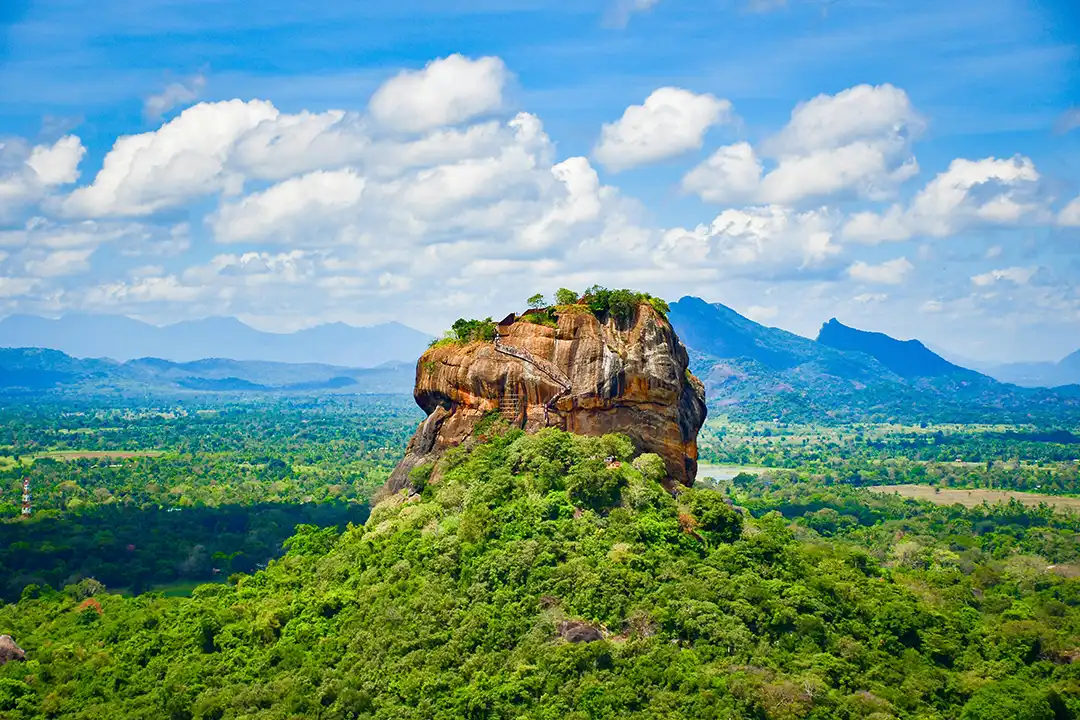
Imagine a massive column of rock rising dramatically from the emerald jungle, its flat summit once home to a royal palace. This is Sigiriya, or Lion Rock, an ancient fortress and UNESCO World Heritage site that stands as a powerful testament to the ingenuity and dramatic history of Sri Lanka. Often hailed as the eighth wonder of the world, a visit to Sigiriya is more than a climb; it is a journey through a real-life architectural marvel and a story of a king’s ambition.
The Audacious History of King Kashyapa
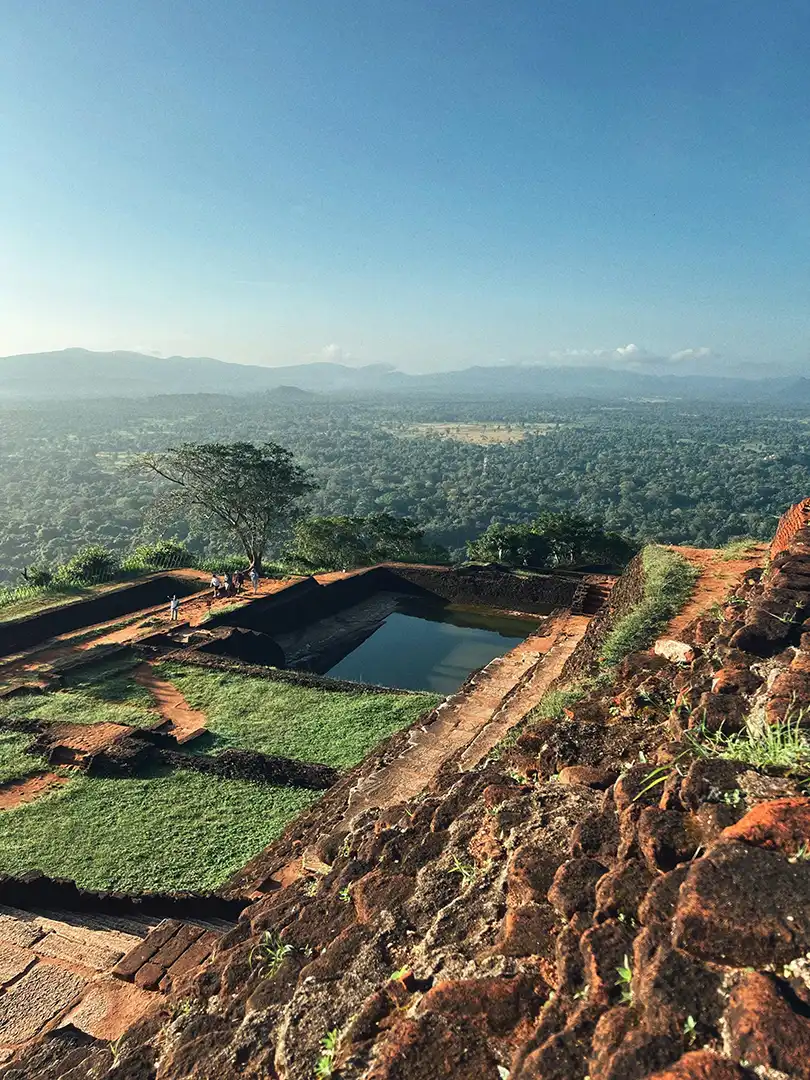
The story of Sigiriya is rooted in a Shakespearian drama of the fifth century. According to the ancient chronicle Culavamsa, the complex was built by King Kashyapa I (477–495 CE) who seized the throne by killing his father. Fearing retribution from his exiled half-brother Moggallana, Kashyapa relocated his capital from Anuradhapura to this enormous granite monolith. He transformed the isolated rock into an impregnable fortress and an opulent sky palace.
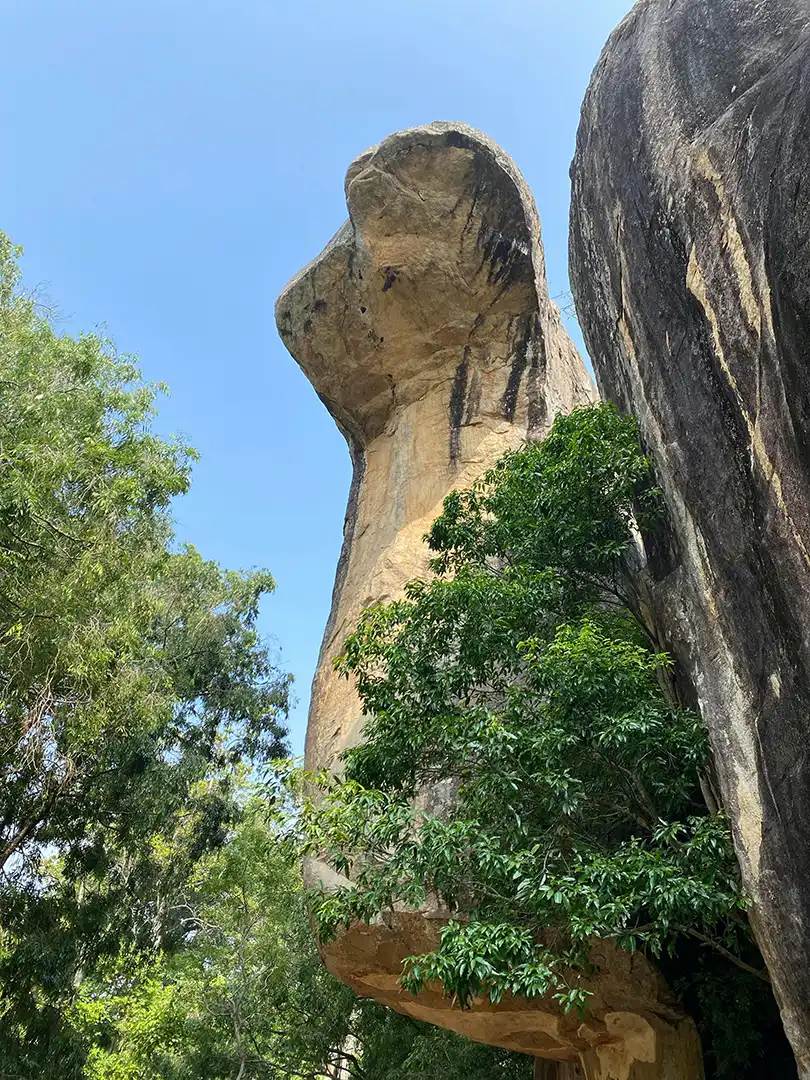
This dual purpose is reflected in the elaborate design. The summit held the royal residence complete with terraced gardens and cisterns carved into the rock. Below, at the midway point, he constructed a massive gateway in the shape of an enormous crouching lion, from which the rock gets its name, Sinhagiri or Lion Rock. Although only the colossal paws remain today, their scale hints at the intimidating majesty of the original structure. After Kashyapa’s defeat, the site was used as a Buddhist monastery until the fourteenth century before eventually being abandoned and lost to the jungle until its rediscovery in the 1800s.
A Masterpiece of Ancient Engineering
Sigiriya’s enduring appeal lies not just in its dramatic setting but in its sophisticated planning. It is considered one of the most important urban planning sites of the first millennium.
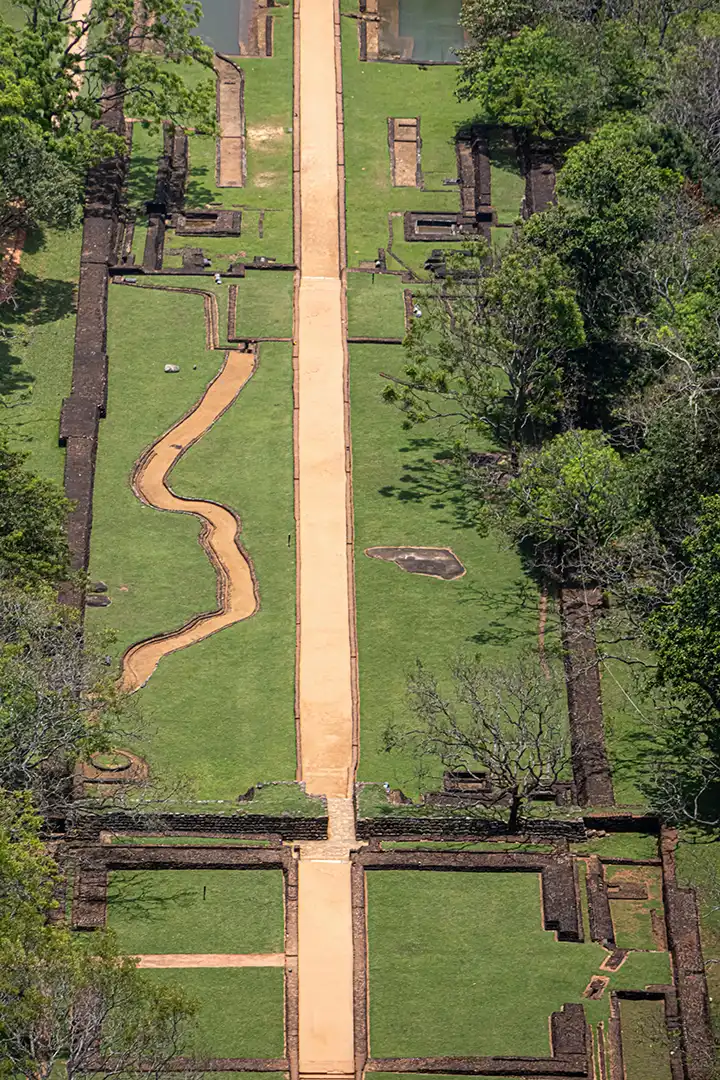
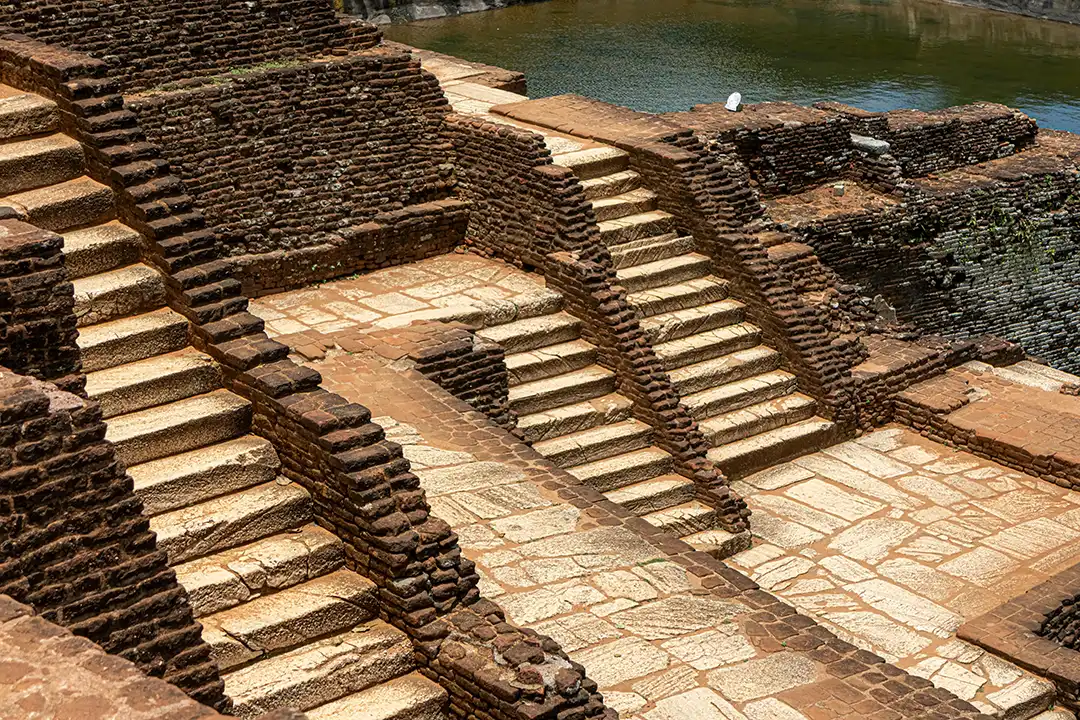
The Water Gardens: At the base of the rock are the magnificent Water Gardens, among the oldest landscaped gardens in the world. They feature complex and perfectly symmetrical arrangements of pools, fountains, and canals. What truly astounds modern visitors is the hydraulic system that fed these features, which included underground terracotta pipes and pressure systems that still function during heavy rains, a marvel of ancient engineering.
The Frescoes: Halfway up the rock face, within a sheltered pocket, are the world famous Sigiriya frescoes. These delicate paintings of graceful, bare breasted women are believed to depict celestial nymphs or perhaps members of King Kashyapa’s court. Originally, the western wall was covered in hundreds of these paintings, creating what an early archaeologist described as “a gigantic picture gallery.” Today only a few remain, but their vibrant colors and serene expressions offer a breathtaking glimpse into the artistic zenith of the era.
The Mirror Wall: Adjacent to the frescoes is the Mirror Wall, a section of the wall once polished so finely with a special plaster that the king could see his reflection. Over time, it became a register for visitors, holding thousands of verses of graffiti, some dating back to the eighth century. These ancient poems and inscriptions confirm that Sigiriya was a tourist destination more than a thousand years ago, providing invaluable insights into the Sinhalese language and ancient travel.
Planning Your Ascent to the Sky Palace
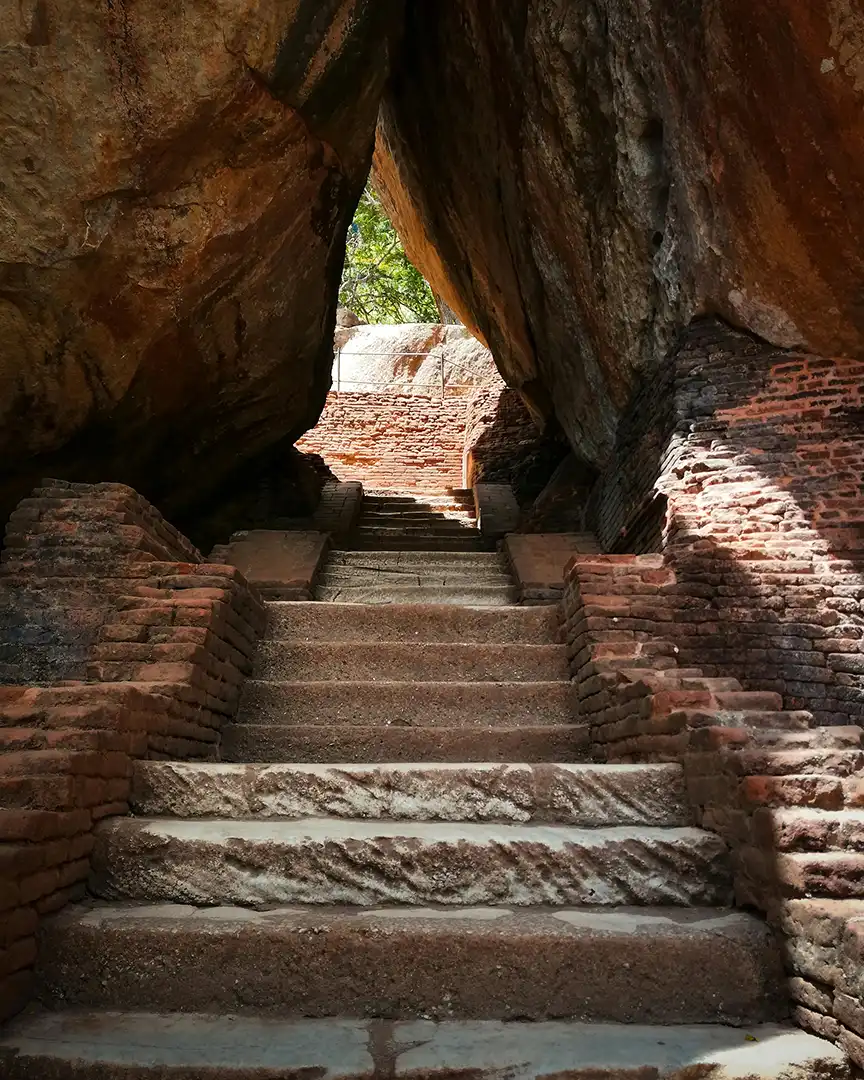
The climb to the summit involves approximately 1200 steps and takes about two to three hours at a relaxed pace. To ensure the best experience and to avoid the scorching tropical sun, it is highly recommended to start early, ideally as soon as the site opens around 7:00 AM, or visit in the late afternoon for sunset views.
The current ticket price for foreign tourists is generally around $35 USD, which includes entry to the excellent Sigiriya Museum at the entrance. This museum provides essential context and historical information, making it a worthwhile stop. Visitors should be prepared for the heat and humidity, carry water, and be aware of occasional wasp activity which can sometimes cause temporary closures.
For an alternative and often less crowded viewpoint, consider climbing the nearby Pidurangala Rock at sunrise. From its summit, you are rewarded with an iconic, postcard perfect view of the entire Sigiriya rock fortress silhouetted against the rising sun.
Sigiriya is truly an unforgettable destination that synthesizes history, art, and landscape into a singular experience. It is a symbol of Sri Lankan pride and a must see on any traveler’s itinerary. Would you like me to find out about lodging options near Sigiriya?